Write Where We Belong was created from the belief that each of us is born with creative genius and that the creative self has the power to heal—not only the self, but the world we live in. Two decades ago founder Mary Simmerling shared a single poem that helped ignite a global movement using poetry to challenge the myths that silence survivors. That same conviction continues to guide everything we do: to leverage the healing powers of the creative self to help ourselves and each other heal and become agents of healing in our own communities.
This community is built on a simple premise: healing requires truth. We do not break free by sanitizing what has happened to us, or by smoothing violence into something more palatable for the comfort of others. We write and create on the axis of trauma, grief, and repair. Our work centres on people with lived experiences of grief and loss—whether through gender-based violence, sexual violence, or other forms of traumatic violence—and on the many personal and collective losses that shape our time: the loss of our freedoms, the loss of our own voices, the loss of loved ones, the loss of our earth, our forests, our rivers, and the climate that sustains us—the loss of the nature that keeps us all alive—the loss of ourselves, and the loss of our connections to each other as human beings. It is through writing and art that I seek to understand what loss reveals about meaning, resilience, and the possibility of repair.
About Mary
Mary Simmerling, Ph.D., is an Ottawa-based disabled poet, writer, philosopher, curator, publisher, and inter-arts artist, and a Full Member of the League of Canadian Poets. Poetry is at the centre of her practice. She is the author of MARY WAS HERE: an effigy of sorts (2024) and Sometimes, in the Afterwards: Meditations on Loss (2025), and the editor of Making Space for the Light: Documenting the Violence that Shapes the Lives of Women and Girls (2026).
Her poem “What I Was Wearing,” rooted in her own experience of sexual assault and first copyrighted in 2005, became an originating text for the What Were You Wearing? installation movement challenging victim-blaming. She founded Write Where We Belong and Write Where We Belong Press, where she integrates poetry, publishing, workshops, and survivor-centred public art.
Her work examines what violence, grief, memory, love, and loss leave in the body and in language. Her current poetry manuscript, Retracing the Silence: Poems from My Body, explores bodily memory, family history, collective testimony, and the restorative possibilities of nature.
Philosophy & Practice
I work at the intersection of philosophy, poetry, cultural criticism, publishing, and public art. My writing and curatorial practice begin from a simple but demanding premise: justice is inseparable from voice. I am interested in the mechanisms by which violence is minimized, aestheticized, misnamed, or made socially acceptable, and in the forms of structured ignorance that determine whose testimony is believed and what bodily evidence is permitted to mean.
Across essays and poems, I treat language as a site of power. My work insists on accurate naming and refuses the rituals of minimization that protect perpetrators, erase context, and weaken truth. In my editorial practice, I structure anthologies to make visible the movement from fracture to reckoning to light without imposing false resolution.
I am trained in Adlerian theory, which understands human beings as indivisible from themselves and from one another. This belief in gemeinschaftsgefühl—our shared social interest and capacity for belonging—underlies how I teach, facilitate, edit, curate, and create. Transformation and meaning-making are not solitary acts; they take place through witness, language, and community.
I understand neurodivergence as a way of perceiving: noticing patterns and contradictions others may overlook, connecting disciplines, and developing new frames for understanding and repair. My work brings philosophy, ethics, poetry, research, and curatorial practice into the same inquiry into suffering, beauty, responsibility, and belonging.
I believe that art and writing belong to everyone and that a writer is someone who writes. In all of this work, I return to the same claim: silencing is itself a form of violence. I write, publish, teach, and build so that silencing can be interrupted.
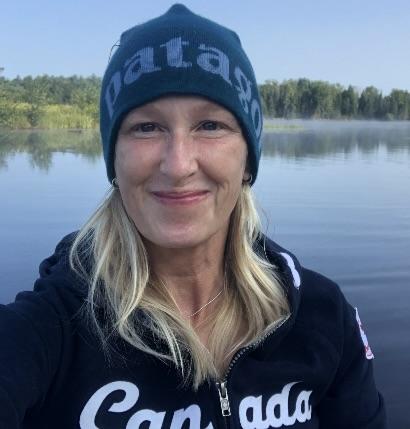
The Architecture of Impunity is a forensic audit of the systems that normalize violence against women and girls. Moving through language, culture, law, medicine, media, and the courts, Mary Simmerling examines how predation is softened, disguised, administratively absorbed, and made to appear ordinary.
Blending case files, cultural criticism, poetry, and visual documentation, the book traces the structures that protect perpetrators and the institutions that enable them: objectification, disbelief, credibility policing, publication bans, NDAs, institutional prestige, and the epistemic frameworks that discredit survivors. Drawing on her work as a philosopher, poet, curator, and survivor, Simmerling has innovated a method she refers to as investigative moral philosophy. This is not a book about isolated incidents or individual bad actors. It is about architecture: how harm is built, normalized, and defended in plain sight.
Write Where We Belong is a multifaceted Canadian literary and arts organization focused on using writing and art as tools for social justice. With a core dedication to advancing social justice, ending violence, and harnessing the powers of the creative self, Write Where We Belong hosts workshops, literary and arts events, and provides editing and production services for creative works. Write Where We Belong Press curates, edits, and publishes writing that emerges from the layered geographies of structural and gender-based violence, grief, loss, and hope.
By creating spaces for writers and artists of all levels to explore, discover, and share their stories, we hope to cultivate new conversations that will be the impetus for change. Things can be different. We can do better, together.

Notice to Authors: Thank you for your interest in Write Where We Belong Press. To ensure each of our current authors receives the deep collaboration and dedicated care they deserve, our publishing roster is completely committed through 2026 and 2027.
We welcome inquiries for 2028 and beyond. If you have a future project you would like us to consider, please reach out to connect.